New US AI Chip Export Controls Explained: What the Remote Access Rule Means for Asia, Cloud Users and Developers
The United States has tightened its AI chip export controls again, and this time the target is not the chips being shipped to China. It is the computing power that Chinese companies can rent from data centers in other countries. On 16 November 2026, the US Commerce Department’s Bureau of Industry and Security (BIS) released a new rule called “Addressing Remote Access to Advanced Semiconductors”. It is expected to take effect when it is published in the Federal Register, which law firms tracking it expect on 19 November.
For many of our readers in South and Southeast Asia, this matters more than most chip news. Malaysia, Singapore, Thailand and Indonesia are named directly in the rule. In this post we explain what it says in plain English, who it affects, and whether it changes anything for a developer or small business that uses cloud AI tools.
Note: this is a news explainer, not legal advice. Export control rules are detailed and can change. If your business ships, resells or hosts advanced chips, talk to a trade compliance specialist and read the official text on the BIS website.
The short version
- What changed: a US license is now needed to send advanced AI chips or servers to a data center anywhere in the world if that data center provides large amounts of computing power to companies based in China or other restricted countries.
- Why: US officials say Chinese firms were getting around existing controls by renting computing power abroad instead of buying chips directly.
- Who is named: Indonesia, Malaysia, Singapore, Thailand and Brazil now need licenses for advanced chip shipments, because Commerce says they carry a “higher-than-normal risk of diversion”.
- Size threshold: the rule targets big facilities, roughly equal to more than 750 top-end Nvidia H100 or H200 chips.
- Also: the rule formally scraps the Biden-era “AI Diffusion Rule” from January 2025.
What is the “remote access” problem?
Since 2022, the US has stopped the most powerful AI chips, such as Nvidia’s H100 and newer models, from being sold to China. But training an AI model does not require owning the chips. You can rent them, the same way you rent a server for a website.
So a gap appeared. A data center in a third country could legally buy American chips and then rent their computing power over the internet to a company in China. The chips never crossed a Chinese border, but the computing did. Reuters reported last week that Chinese AI companies were rushing to lock in overseas computing capacity because they expected exactly this kind of crackdown.
The new rule calls this “a logical extension of existing controls”. In simple words: if you cannot buy the chip, you should not be able to rent it either.
What the new rule actually requires
1. A license for chips going to certain data centers
A license is required to export, re-export or transfer covered AI chips and servers when the seller knows they are going to a data center that provides, or will provide, more than 12 million “TPP” of computing power to companies headquartered in China, Macau or another country in the US “D:5” group. That group includes China, Russia, Iran, North Korea and 18 others.
TPP stands for “total processing performance”, a measure the US uses to rate chips. According to TechCrunch, 12 million TPP is about the maximum power of 750 Nvidia H100 or H200 chips. The threshold also counts “linked” data centers, so splitting capacity across several connected sites does not get around it.
2. Know your customer checks
Sellers and data center operators must check who owns and controls their customers. If a foreign data center refuses or is unable to share this information, the rule treats that as a red flag. It also covers indirect access, such as a middleman company that rents the compute and then trains models for a Chinese firm.
3. Five named countries
Indonesia, Malaysia, Singapore, Thailand and Brazil now need a license for advanced chip shipments, reviewed case by case. Shipments to companies headquartered in the US are excluded, as long as the exporter files monthly reports. Commerce can add more countries later and says it will watch for countries that tolerate evasion.
4. A 90 day deadline for existing data centers
Data centers that already provide significant computing power to companies based in China, Macau or other D:5 countries have 90 days from the effective date to get a license. Without one, they risk future export restrictions.
5. An exception for recommendation systems
The rule does not apply to computing used only for “commercial recommender systems”, the kind of AI that suggests products in an online shop or videos on social media. The exception is narrow: anything that generates new content, like a chatbot or image generator, does not qualify, and companies must file a separate submission to BIS to use it.
Why now?
The timing is not random. Nvidia, the company that makes most of the world’s AI chips, is going through its biggest crisis in years. Co-founder Jensen Huang resigned as CEO last week and CFO Colette Kress is now interim CEO. TechCrunch reports that the US government has wanted to add an Nvidia customer called Megaspeed to a restricted list, because officials believe it bought thousands of Nvidia chips to supply computing power to Chinese businesses.
Nvidia itself is reacting. According to CNBC, citing two unnamed sources, Nvidia has told customers it will not sell chips “for now” to those who rent more than 50% of their GPUs to Chinese companies. Nvidia has not publicly confirmed this. Separately, the US Congress is considering the Remote Access Security Act, which would give the government even broader power over cloud access to chips. It passed the House in January but not yet the Senate.
All of this lands on the same day Nvidia reports its quarterly earnings, its first since Huang left, so expect a lot of questions about China on that call.
What it means for Southeast Asia
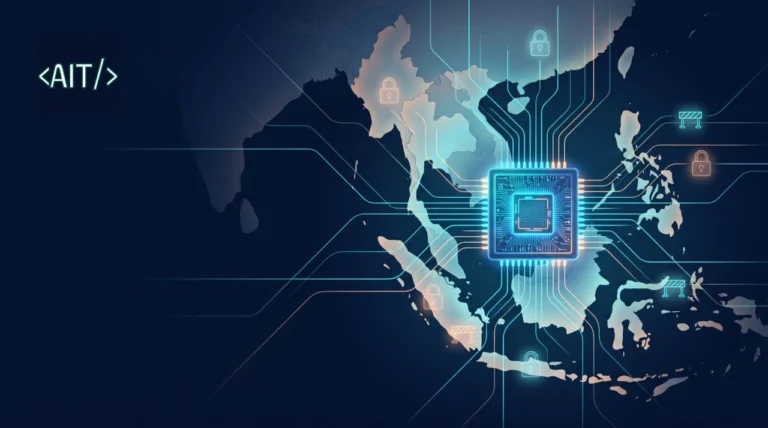
Malaysia, especially the state of Johor, along with Singapore, Thailand and Indonesia, has become one of the fastest growing data center regions in the world. Cheap land, power and closeness to Singapore have attracted huge AI investments.
For these countries, the new rule could mean:
- Slower chip deliveries while licenses are reviewed case by case.
- More paperwork for data center operators, who must now prove who their customers really are.
- Possible loss of some customers, if facilities were relying on Chinese demand.
- An advantage for US-headquartered cloud companies, since shipments to them are excluded from the new license requirement in these five countries.
Whether this slows the region’s data center boom or just adds compliance costs is not clear yet. A lot will depend on how quickly the US approves licenses in practice.
Does this affect you as a developer or small business?
For most people reading this, the honest answer is: not directly. The rule is aimed at large data centers and the companies that sell them chips. If you use ChatGPT, Claude or Gemini, call an AI API from your app, or rent a few cloud GPUs to test a model, you are far below the threshold the rule is talking about.
There are a few indirect effects worth watching, though:
- More identity checks. GPU cloud providers in the named countries may ask for more company details when you sign up, because they now have to prove who their customers are.
- Regional prices. If compliance costs rise for data centers in Malaysia, Singapore or Thailand, GPU rental prices in those regions could rise too. If you rent GPUs, compare prices across regions.
- Where your AI runs. Many AI tools let you choose a region. If you serve customers in South or Southeast Asia, nearby regions give faster responses, so it is worth knowing which provider and region your tools use.
- Do not depend on one supplier. As we wrote after last week’s Microsoft outage, keep your workflows portable so you can move to a different provider or region if prices or rules change. An automation tool like n8n makes it easier to swap one AI model for another.
The bigger picture: compute is the new oil
This rule is another sign that computing power has become a strategic resource, controlled much like energy or rare minerals. Just this week, Anthropic’s IPO filing showed roughly $900 billion in spending commitments, mostly for compute (we covered that in our Anthropic IPO explainer). When the companies building AI need that much computing power, who is allowed to rent it, and where, becomes a political question as much as a technical one.
Expect more of this: more countries named, more customer checks, and more pressure on chip makers and cloud providers to know exactly who is using their hardware.
Frequently asked questions
When does the new AI chip rule take effect?
It takes effect when it is published in the Federal Register, expected on 19 November 2026. Public comments are accepted for 60 days after publication, and existing data centers serving restricted companies have 90 days to get a license.
Which countries are affected?
The remote access limits protect against companies based in China, Macau and other D:5 countries, such as Russia, Iran and North Korea. Separately, Indonesia, Malaysia, Singapore, Thailand and Brazil now need licenses for advanced chip shipments.
Is Bangladesh or India affected?
Neither is among the five countries named in the rule. The worldwide license requirement still applies to any data center, in any country, that supplies large amounts of computing power to restricted companies.
Can I still use ChatGPT, Claude or Gemini?
Yes. The rule is about who can buy and host large numbers of advanced chips, not about everyday use of AI apps.
What happened to the AI Diffusion Rule?
The January 2025 rule, which sorted countries into tiers with different chip limits, has been formally rescinded. The Trump administration had said in May it would replace it, arguing it put unnecessary limits on US companies and allies.
Final thoughts
The new AI chip export controls close a loophole that was easy to see: you did not need to own a chip to use it. For large data centers in Southeast Asia, the rule brings licenses, customer checks and a 90 day clock. For most developers and small businesses, nothing changes today, but it is a good moment to know where your AI tools actually run and to keep your setup flexible.
Sources: TechCrunch, Nixon Peabody legal alert, CNBC and Bloomberg.